Analytics
Run experiments to improve how AI recommends your brand
See how published changes perform, separate real gains from noise, and show which work earns more mentions and citations.

Published changes
Page-level impact, not another export
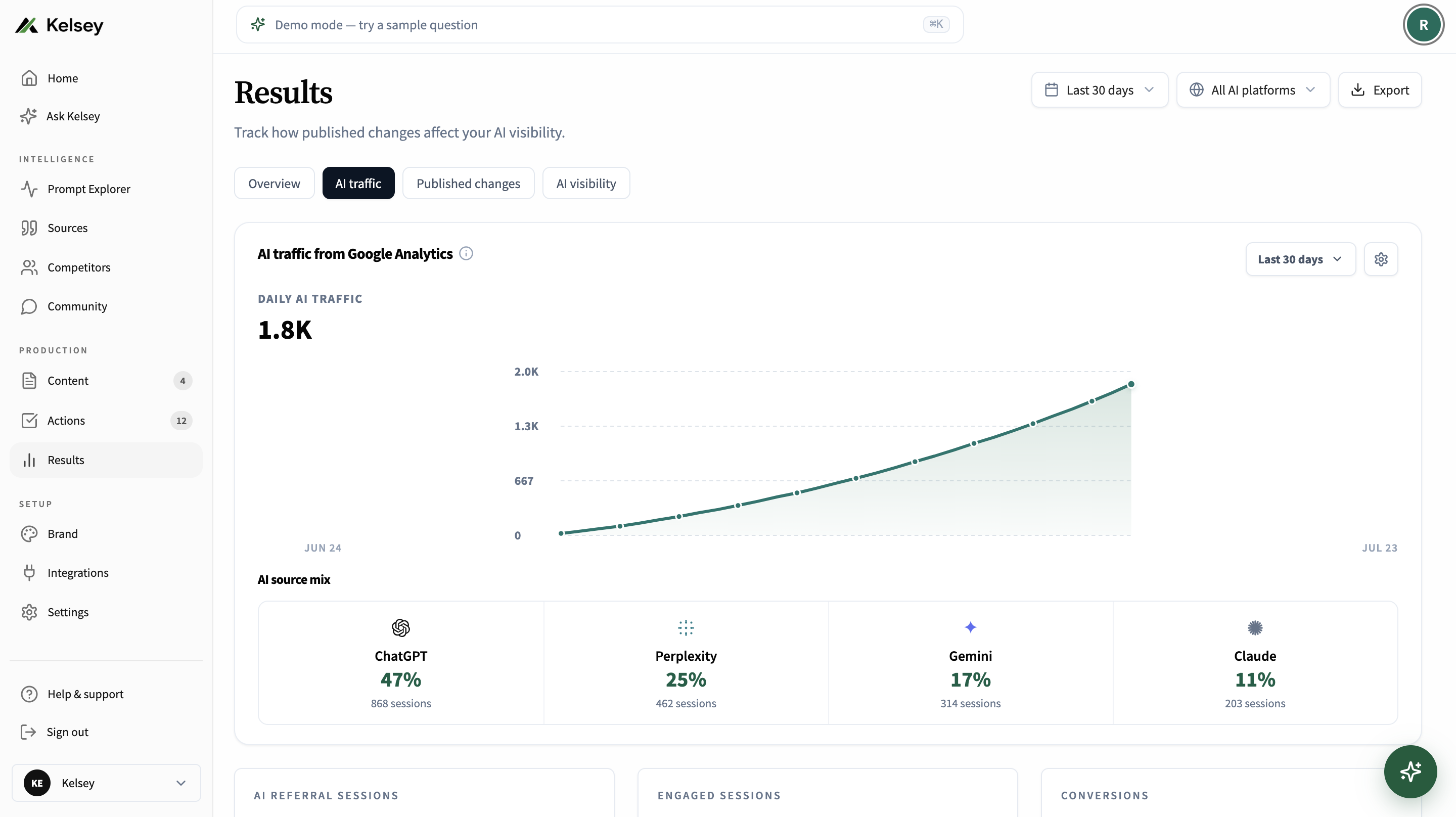
Every publish starts a tracked experiment. Results ties each page to the prompts it targets, the baseline locked at ship time, and the visibility movement since—so your team can answer “did this change work?” without reconciling spreadsheets.
Filter by date range, platform, or experiment status. Drill into a single page to see weekly scans, citation gains, and which prompts moved.
Results · northstar.io
Published changes
Best Tools to Track ChatGPT Mentions (2026)
Northstar vs Peec: Which Mention Tracker Fits Agencies?
How to Audit AI Citations for B2B SaaS
3 active experiments · 19 prompts tracked this quarter
Best Tools to Track ChatGPT Mentions (2026)
Experiment started May 1 · Baseline locked at publish
30-day experiments
A fixed window beats reacting to one scan
Each publish locks a pre-change baseline, then runs weekly AI scans for 30 days. That cadence separates sustained gains from noise—your team sees the trend, not just the latest number.
Experiment notes attach context to each scan: what shipped, what moved, and what still needs time. When leadership asks why a page worked, the answer is already documented.
Search demand
Google Search and AI Search in one view
Connect Google Search Console to layer clicks, impressions, and query movement next to Kelsey’s AI mention and citation data—so you can see whether a page is winning in assistants, Google, or both.
Prioritize pages close to winning, then measure published changes here alongside AI Search results.
Ready to prove what works?
Turn published changes into measurable AI visibility outcomes.
Get started