Kelsey prepares new content, page refreshes, Reddit replies, and page updates based on your AI search data, GSC and content.
Work prepared
4 ready
Refresh pricing pageReady
Create comparison pageDrafted
Reply to Reddit threadPrepared
Draft new buyer guideDrafted
03
Track what changes
Publish the SEO + AEO articles that will get you mentioned, and track whether your AI mentions, citations, and referral traffic grow.
Results after publishing
Example
214 visits
+138%
Customer story
Kelsey makes AI less of a black box
I’ve been using Kelsey to improve GEO rankings at Alertly and get a better understanding of how ChatGPT and other AI engines are suggesting the product. Kelsey clearly shows which prompts you’re showing up for, but the real benefit is being guided with actionable to-dos to improve your visibility.
Kelsey finds your biggest content and third party opportunities
Kelsey uses your search findings to prepare page refreshes, product-fact corrections, and timely conversations worth joining.
Page refresh
AI search tools for marketing teams
Google clicks down 24%
Missing from AI answers
Example
ContentBI
Best AI-search tools for marketing teams
AI search is changing how buyers discover and evaluate tools. This guide compares leading platforms on the criteria AI answers actually use so marketing teams can choose the right fit.
What marketing teams should compare
Most roundups list features without saying which ones change recommendations.
We score each tool on prompt coverage, citation quality, multi-client reporting, refresh workflows, and how clearly results map to buyer questions.
Platform comparison
Kelsey, Profound, and OtterlyAI all track AI mentions. Kelsey is strongest when you need the diagnosis and the page refresh in one workflow — not just a dashboard of who got named.
Product facts
Example
Buyer question
What does Kelsey cost?
ChatGPT
$49/month
Incorrect
Gemini
$79/month
Correct
Perplexity
$79/month
Correct
Review correction
Recent Reddit threads
Example
r/marketing
Posted 3h ago
What are agencies using to track brands in ChatGPT?
Check whether AI can access your pages, extract accurate product facts, and find content relevant to the questions you track. Turn those findings into specific improvements to review.
Kelsey combines Google Search Console data with AI Search tracking to identify content opportunities, prepare page updates and new drafts, and monitor performance after publication.
Yes. Connect Search Console to find pages losing clicks, queries getting impressions, and relevant questions your content could answer more clearly.
You need it for recommendations based on your Google search performance. You can use AI Search tracking without connecting it.
Both. Kelsey suggests an update when an existing page fits the question and a new page when your website needs separate coverage.
You review the prepared content before publishing through your existing workflow.
No. Kelsey helps you make informed content changes and track what happens afterward, but rankings and AI recommendations can change for many reasons.
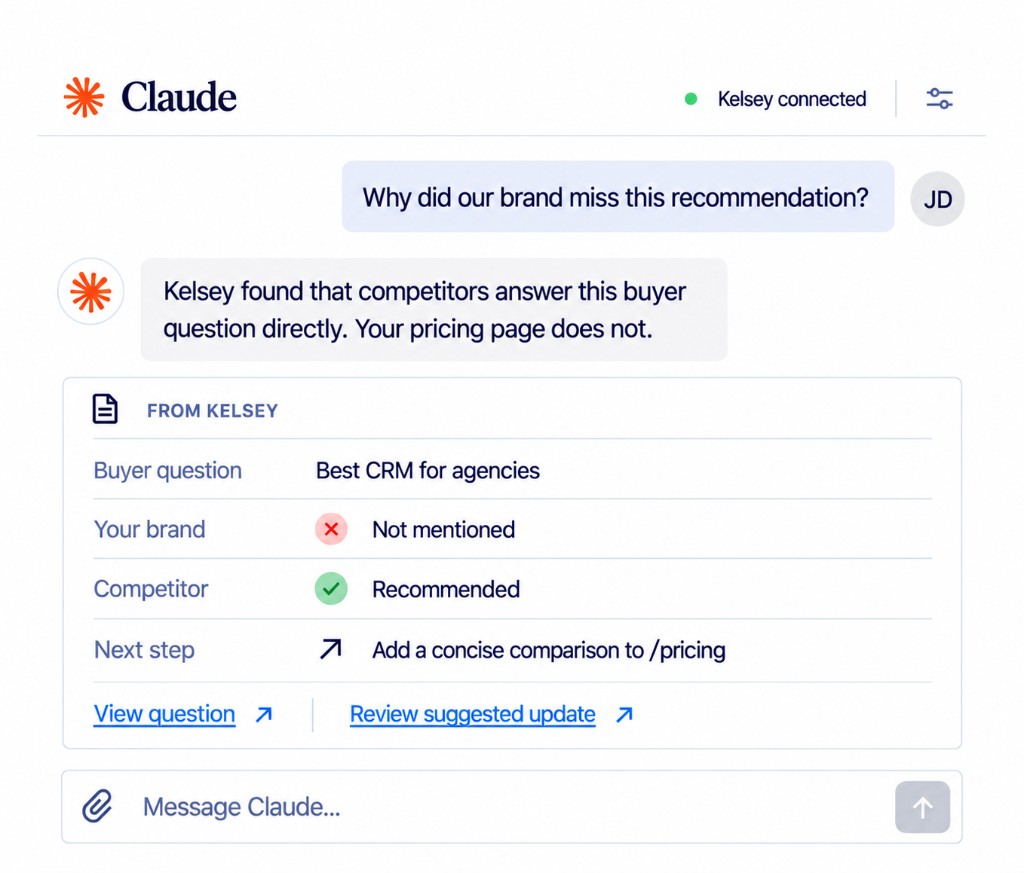
Yes, on Growth and Agency. Connect Kelsey to Claude, Cursor, or ChatGPT and ask about your mentions, competitors, and recommended work using your live tracking data. Starter does not include MCP.
Get started with Kelsey
Find the page worthimproving next
See what buyers ask, where your site falls short, and the next update worth making.
Competitors have dedicated comparison and agency pages that directly answer the buying criteria appearing across these results. Your closest page talks about agencies, but never addresses migration, client management, or multi-account reporting.
Best page to fix
/crm-for-agencies
Recommended action
Refresh this page with the three missing sections.